
Premeditated Resentment: How Mismanaged Expectations Kill Momentum
This week, I found myself frustrated.
Not the kind of frustration that shows up loudly… but the kind that simmers. The kind where you’re doing extra work, rearranging your schedule, and quietly thinking, “this shouldn’t be this hard.”
We had furniture being delivered.
Simple enough, right?
We were supposed to receive two twin mattresses, covers, and platforms on Monday. The team arrived… without the mattresses.
Not ideal, but okay. Things happen.
So we rescheduled for Thursday.
Now here’s where it gets interesting.
I had already adjusted my schedule once. Stayed home Monday. Rearranged my day. And now, we had to do it again. My husband shifted his work. I coordinated coverage for a meeting. We were trying to be flexible and make it work.
But the real issue wasn’t the delay.
It was the lack of communication.
We were told we would receive a text one to two days before delivery with a two-hour window. That didn’t happen. Instead, we didn’t know timing until the morning of. Which meant we couldn’t plan. Couldn’t commit. Couldn’t move forward with confidence.
And suddenly… something small turned into something heavy.
Extra coordination. Cancelled meetings. Asking favors from friends. Mental load.

And if I’m being honest, I started telling myself a story.
“This company is a mess.”
“This is so unorganized.”
“This shouldn’t be this hard.”
Even though, up until that moment, my experience had actually been great.
That’s when it hit me.
This wasn’t about mattresses.
This was about the ripple effect of a broken expectation.
The Moment It Shifts
There’s a concept I talk about with clients called premeditated resentment.
It’s what happens when we hold someone accountable to an expectation that either:
wasn’t clearly communicated, or
wasn’t consistently followed through
And before we pause… before we ask questions… before we clarify…
We start building a case.
We assign meaning.
We create a narrative.
We feel frustration rise.
All without full information.
In my situation, the expectation was communicated.
But it wasn’t followed through.
And here’s the part most people miss:
When expectations are broken and communication disappears, people don’t just experience inconvenience… they experience uncertainty.
And uncertainty creates work.
This is where The Compound Effect by Darren Hardy becomes relevant. The book explains how small actions don’t stay small, they stack over time. Repeated consistently, they create major outcomes, whether positive or negative.
Communication works the same way.
Small breakdowns, such as missed updates, unclear timelines, inconsistent follow-through, don’t feel significant in isolation. But they compound. They stack into confusion, frustration, and lost momentum.
What starts as a simple missed update becomes rework, rescheduling, and mental load that no one planned for.
It’s Not the Event. It’s the Ripple Effect.
The missed mattresses weren’t the problem.
The problem was everything that came after:
rearranging schedules (twice)
canceling meetings
coordinating backup plans
asking others to step in
holding mental space for “what’s happening?”
That’s what people remember.
That’s what creates frustration.
And in business, that’s what kills momentum.
Because every time your team, your client, or your franchisee has to stop and figure things out that should have been clear… you’ve just slowed everything down.

Where I See This All the Time
I see this constantly with founders and franchisors.
Recently, I was working with a client who was frustrated with a franchisee.
The franchisee still had a full-time job… while trying to build his franchise on the side.
The founder was frustrated.
“This isn’t working.”
“He’s not all in.”
“He should be further along.”
So we stopped and asked a simple question:
Where was this expectation clearly set?
Not assumed.
Not implied.
Not “we thought it was obvious.”
Clearly communicated.
Because here’s the truth:
That franchisee wasn’t being difficult.
He was operating based on what he understood.
And no one had fully walked him through the reality:
the time commitment
the in-person training requirements
the need to be fully engaged to make it work
That’s not a performance problem.
That’s an expectation problem.
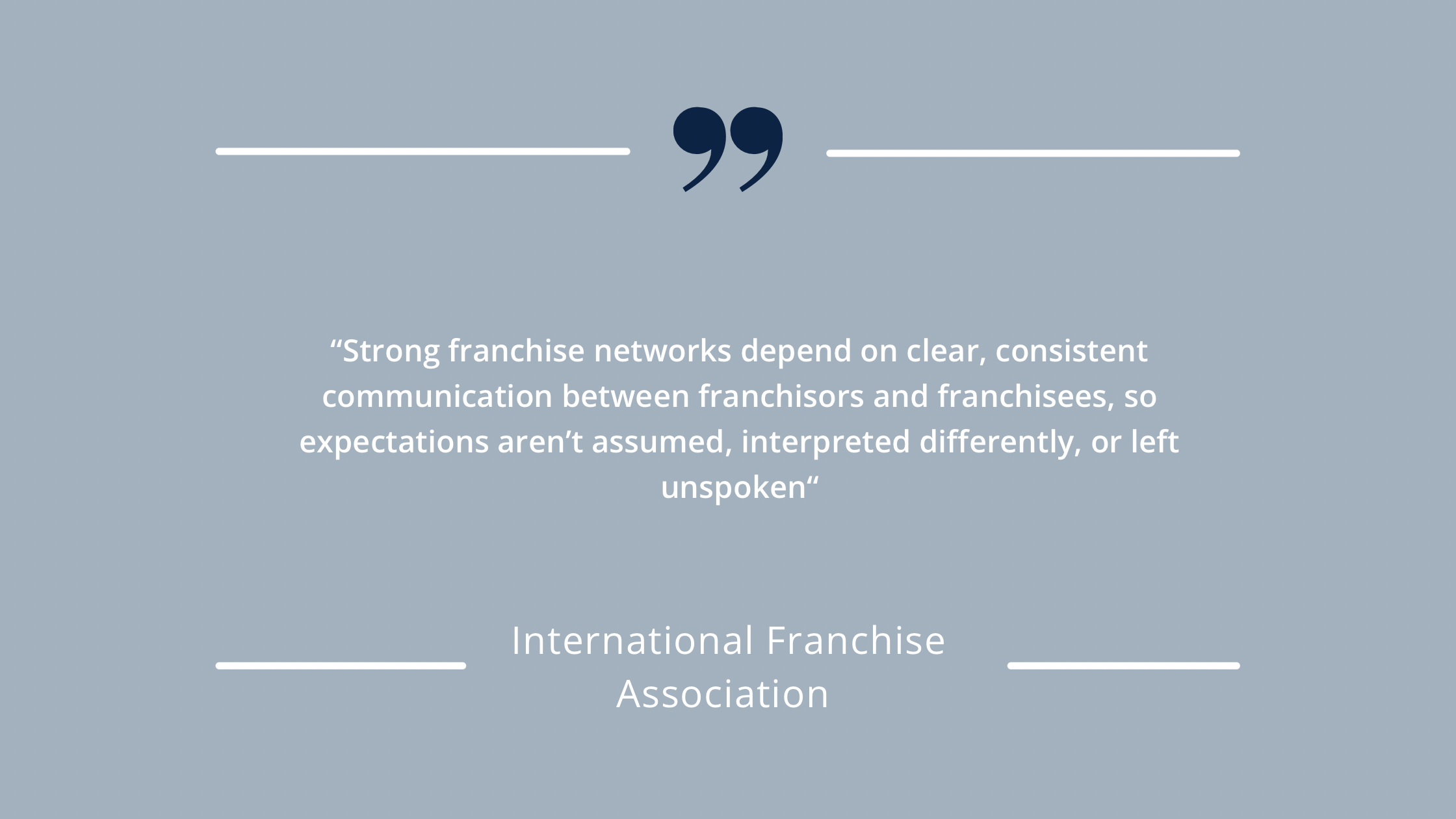
The International Franchise Association talks about this here. They say strong franchise networks depend on clear, consistent communication between franchisors and franchisees, so expectations aren’t assumed, interpreted differently, or left unspoken.
So what did we do?
We didn’t just fix the situation.
We built a system:
clear talking points for franchise development
a checklist of expectations before signing
defined moments where key realities are communicated
Because if it lives in your head, it doesn’t exist in your business.
What Great Communication Actually Looks Like
If I were advising that furniture company, here’s what I would tell them:
When something changes:
Communicate it verbally
Follow up with an email
Reinforce it with a text
When a schedule is set:
Confirm the exact delivery window
Follow through on the timing promised
And if something breaks:
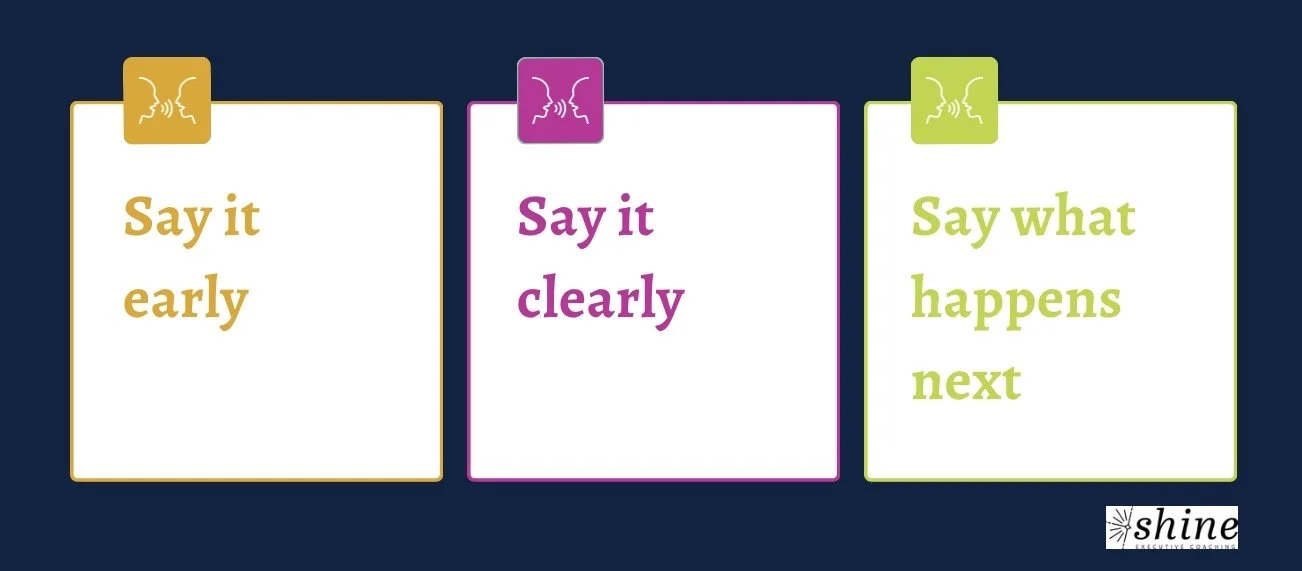
Say it early
Say it clearly
Say what happens next
Because one missed step creates a chain reaction.
What This Means for You
If you’re leading a team, a brand, or a growing business, this matters more than you think.
Mismanaged expectations don’t just create frustration.
They create:
rework
hesitation
broken trust
slower execution
And over time, that compounds.
Here’s Your Work This Week
Start here:
👉 Who am I frustrated with right now… and what did I assume they should just know?
Sit with that for a minute.
Then take one step:
👉 Name one expectation out loud that has only existed in your head.
Say it.
Write it.
Clarify it.
Document it.
Because momentum doesn’t just come from doing more.
It comes from removing friction.
And one of the biggest sources of friction in any business is this:
Expecting people to read your mind.
If you eliminate that… everything moves faster.
Shine Lesson Learned:
Unspoken or inconsistently communicated expectations create unnecessary friction and quiet frustration. What feels like a small miss to you can create a ripple effect of extra work for others. Clarity and follow-through aren’t extras, they’re what keep momentum moving.
Shine On,
Shannon